First Earth-Like Planet With an Atmosphere Just Found

Scientists have discovered what may be the first truly Earth-like planet with a confirmed atmosphere, bringing us closer than ever to finding a world that could support life. Using powerful space telescopes, researchers detected gases surrounding the planet, revealing clues about its climate, chemistry, and potential habitability. This breakthrough could transform the search for alien life because an atmosphere is one of the key ingredients that makes a planet more like Earth. This video explores how scientists found it, what they detected in the atmosphere, and why the discovery is generating excitement across the scientific community. For the first time, humanity may be looking at a distant world that feels surprisingly familiar.
Credit:
Solar Wind Animations: By NASA’s Scientific Visualization Studio – NASA Goddard/CIL/Wes Buchanan, Krystofer Kim – https://svs.gsfc.nasa.gov/14892, https://commons.wikimedia.org/wiki/File:Solar_Wind_Animations_(SVS14892_Endurance_SEQ3B_4K).webm
Moon transit of sun large: By NASA – https://science.nasa.gov/science-news/science-at-nasa/2007/12mar_stereoeclipse/, https://commons.wikimedia.org/wiki/File:Moon_transit_of_sun_large.ogv
CC BY 4.0 https://creativecommons.org/licenses/by/4.0:
structure of the Ag-Au nanocluster: By Haberfehlner G, Thaler P, Knez D, Volk A, Hofer F, Ernst W, Kothleitner G – https://doi.org/10.1038/ncomms9779, https://commons.wikimedia.org/wiki/File:Formation-of-bimetallic-clusters-in-superfluid-helium-nanodroplets-analysed-by-atomic-resolution-ncomms9779-s2.ogv
Animation is created by Bright Side.

—————————————————————————————-
Music from TheSoul Sound: https://thesoul-sound.com/

Check our Bright Side podcast on Spotify and leave a positive review! https://open.spotify.com/show/0hUkPxD34jRLrMrJux4VxV
Subscribe to Bright Side: https://goo.gl/rQTJZz
—————————————————————————————-
Our Social Media:
Facebook: https://www.facebook.com/brightplanet/
Instagram: https://www.instagram.com/brightside.official
TikTok: https://www.tiktok.com/@brightside.official?lang=en

Stock materials (photos, footages and other):
https://www.depositphotos.com
https://www.shutterstock.com
https://www.eastnews.ru
—————————————————————————————-
For more videos and articles visit: http://www.brightside.me
—————————————————————————————-
This video is made for entertainment purposes. We do not make any warranties about the completeness, safety and reliability. Any action you take upon the information in this video is strictly at your own risk, and we will not be liable for any damages or losses. It is the viewer’s responsibility to use judgement, care and precaution if you plan to replicate.

This Planet Could Support Life – And It’s So Close

Astronomers have identified a nearby world that could be one of the most promising places to search for life beyond Earth. Located surprisingly close in cosmic terms, this intriguing exoplanet orbits within its star’s habitable zone, the region where temperatures may allow liquid water to exist on the surface. Early observations suggest the planet could possess conditions suitable for life, making it a prime target for powerful observatories such as the James Webb Space Telescope. Scientists are now racing to study its atmosphere, search for potential biosignatures, and determine whether this world is truly Earth-like or merely another hostile alien environment. Join us as we explore the fascinating planet that could support life and discover why astronomers believe one of humanity’s best chances of finding extraterrestrial life may be closer than anyone expected.
Credit:
Moon transit of sun large: By NASA – https://science.nasa.gov/science-news/science-at-nasa/2007/12mar_stereoeclipse/, https://commons.wikimedia.org/wiki/File:Moon_transit_of_sun_large.ogv
NASA’s Habitable Worlds Observatory Will Search For Life: By NASA’s Scientific Visualization Studio – eMITS/Scott Wiessinger, eMITS/Chris Smith, NASA/GSFC/Claire Andreoli, eMITS/Jonathan North, eMITS/Jenny McElligott, eMITS/Jacob Pinter, NASA/GSFC/Aki Roberge, NASA/GSFC/Giada Arney, John Rhys-Davies – https://svs.gsfc.nasa.gov/14861, https://commons.wikimedia.org/wiki/File:NASA%27s_Habitable_Worlds_Observatory_Will_Search_For_Life_(SVS14861).webm
What is space weather: By NASA’s Scientific Visualization Studio – “Andromeda” by David Naroth, Arun Ganapathy & Victor Mercader [BMI] from Universal Production Music – https://svs.gsfc.nasa.gov/14907, https://commons.wikimedia.org/wiki/File:What_is_space_weather-_(SVS14907).webm
GJ 251 c: By NASA, https://science.nasa.gov/exoplanet-catalog/gj-251-c/
CC BY-SA 4.0 https://creativecommons.org/licenses/by-sa/4.0:
Proxima Centauri b: By ESO/Konstantino Polizois/Nico Bartmann – http://www.eso.org/public/unitedkingdom/videos/konstantino_polizois/, https://commons.wikimedia.org/wiki/File:Proxima_Centauri_b.webm
CC BY 4.0 https://creativecommons.org/licenses/by/4.0:
A journey to Proxima Centauri: By ESO./L. Calçada/Nick Risinger (skysurvey.org) – http://www.eso.org/public/videos/eso1629d/, https://commons.wikimedia.org/wiki/File:A_journey_to_Proxima_Centauri_and_its_planet_(video).webm
possible surface temperatures on Proxima b: By ESO – http://www.eso.org/public/videos/eso1629h/, https://commons.wikimedia.org/wiki/File:Numerical_simulation_of_possible_surface_temperatures_on_Proxima_b_(3-2_resonance).webm
the planet orbiting Proxima Centauri: By ESO/M. Kornmesser – http://www.eso.org/public/videos/eso1629c/, https://commons.wikimedia.org/wiki/File:Artist%27s_impression_of_the_planet_orbiting_Proxima_Centauri_(surface).webm
Animation is created by Bright Side.

—————————————————————————————-
Music from TheSoul Sound: https://thesoul-sound.com/

Stock materials (photos, footages and other):
https://www.depositphotos.com
https://www.shutterstock.com
https://www.eastnews.ru
—————————————————————————————-
For more videos and articles visit: http://www.brightside.me
—————————————————————————————-
This video is made for entertainment purposes. We do not make any warranties about the completeness, safety and reliability. Any action you take upon the information in this video is strictly at your own risk, and we will not be liable for any damages or losses. It is the viewer’s responsibility to use judgement, care and precaution if you plan to replicate.
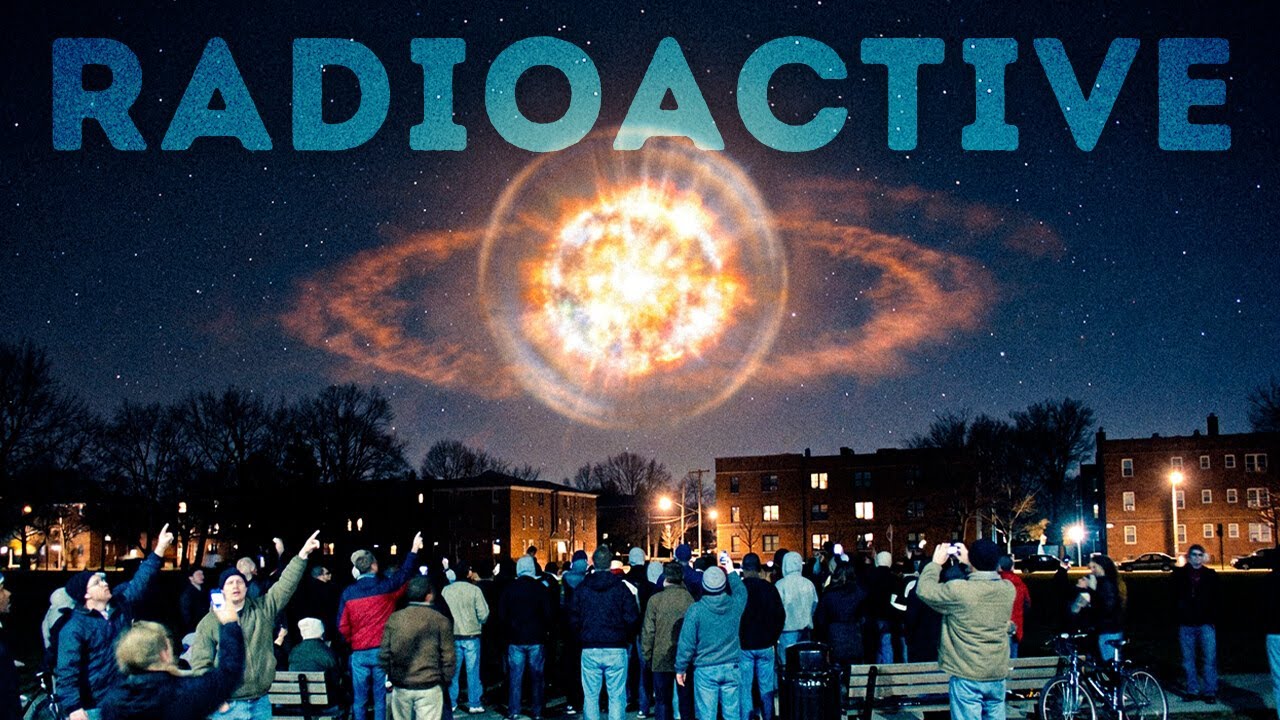
We’ve Never Seen a Supernova Explode – Until Now

For all of human history, supernovae have appeared in the sky only after the explosion had already begun. But now, for the first time, astronomers may have caught a massive star in the final stages before it detonates. Using powerful telescopes and years of observations, researchers have identified unusual warning signs coming from a distant star that appears to be on the verge of becoming a supernova. The discovery offers a rare opportunity to study the final moments of a star’s life and could allow scientists to witness one of the most powerful explosions in the universe as it unfolds in real time. Join us as we explore the star that may be about to explode, the clues that revealed its fate, and why this could become one of the most important astronomical observations ever made.

Credit:
Supernova Explosion: By NASA Goddard, https://images.nasa.gov/details/GSFC_20171208_Archive_e001060
Ancient Supernova Revealed: By NASA/JPL-Caltech/UCLA, https://images.nasa.gov/details/PIA14884
Supernova with Expanding Shell: By NASA GSFC, Michael McClare, Dana Berry, https://images.nasa.gov/details/GSFC_20100126_Nova_m10547_SuperNova
Wake of a Supernova Explosion: By NASA/JPL-Caltech, https://images.nasa.gov/details/PIA10207
Supernova explosion animation: By NASA’s Scientific Visualization Studio – NASA’s Goddard Space Flight Center Conceptual Image Lab – https://svs.gsfc.nasa.gov/20413, https://commons.wikimedia.org/wiki/File:Supernova_explosion_animation,_with_%26_without_pulsar_(SVS20413).webm
Faint Afterglow of Nearby Stellar Explosion: By By NASA, ESA, and The Hubble Heritage Team STScI/AURA) – https://esahubble.org/images/opo0530a, https://commons.wikimedia.org/w/index.php?curid=181209382
Fermi Links Cosmic Neutrino to Monster Black Hole: By NASA Goddard / YouTube, https://commons.wikimedia.org/wiki/File:NASA%27s_Fermi_Links_Cosmic_Neutrino_to_Monster_Black_Hole_vwRSk524dpo.webm
CC BY 3.0 https://creativecommons.org/licenses/by/3.0:
oldest stars in the Universe: By The Royal Society / YouTube, https://commons.wikimedia.org/wiki/File:The_oldest_stars_in_the_Universe_%E2%80%93_A_to[…]with_info_on_Square_Kilometre_Array_modern_astronomy).webm
CC BY-SA 4.0 https://creativecommons.org/licenses/by-sa/4.0:
Binary Stars and SuperMassive Black Hole: By Rogueassasin123, https://commons.wikimedia.org/wiki/File:Binary_Stars_and_SuperMassive_Black_Hole.webm
CC BY 4.0 https://creativecommons.org/licenses/by/4.0:
ALMA and VLT views of an explosive event: By ALMA (ESO/NAOJ/NRAO)/J. Bally/H. Drass et al – http://www.eso.org/public/unitedkingdom/videos/eso1711c/, https://commons.wikimedia.org/wiki/File:Comparison_of_the_ALMA_and_VLT_views_of_an_explosive_event_in_Orion.webm
Animation is created by Bright Side.

This is the AI tool behind it → https://higgsfield.ai/s/general-brightsideofficial-kDdKTb

—————————————————————————————-
Music from TheSoul Sound: https://thesoul-sound.com/

Check our Bright Side podcast on Spotify and leave a positive review! https://open.spotify.com/show/0hUkPxD34jRLrMrJux4VxV
Subscribe to Bright Side: https://goo.gl/rQTJZz
—————————————————————————————-
Our Social Media:
Facebook: https://www.facebook.com/brightplanet/
Instagram: https://www.instagram.com/brightside.official
TikTok: https://www.tiktok.com/@brightside.official?lang=en

Stock materials (photos, footages and other):
https://www.depositphotos.com
https://www.shutterstock.com
https://www.eastnews.ru
—————————————————————————————-
For more videos and articles visit: http://www.brightside.me
—————————————————————————————-
This video is made for entertainment purposes. We do not make any warranties about the completeness, safety and reliability. Any action you take upon the information in this video is strictly at your own risk, and we will not be liable for any damages or losses. It is the viewer’s responsibility to use judgement, care and precaution if you plan to replicate.

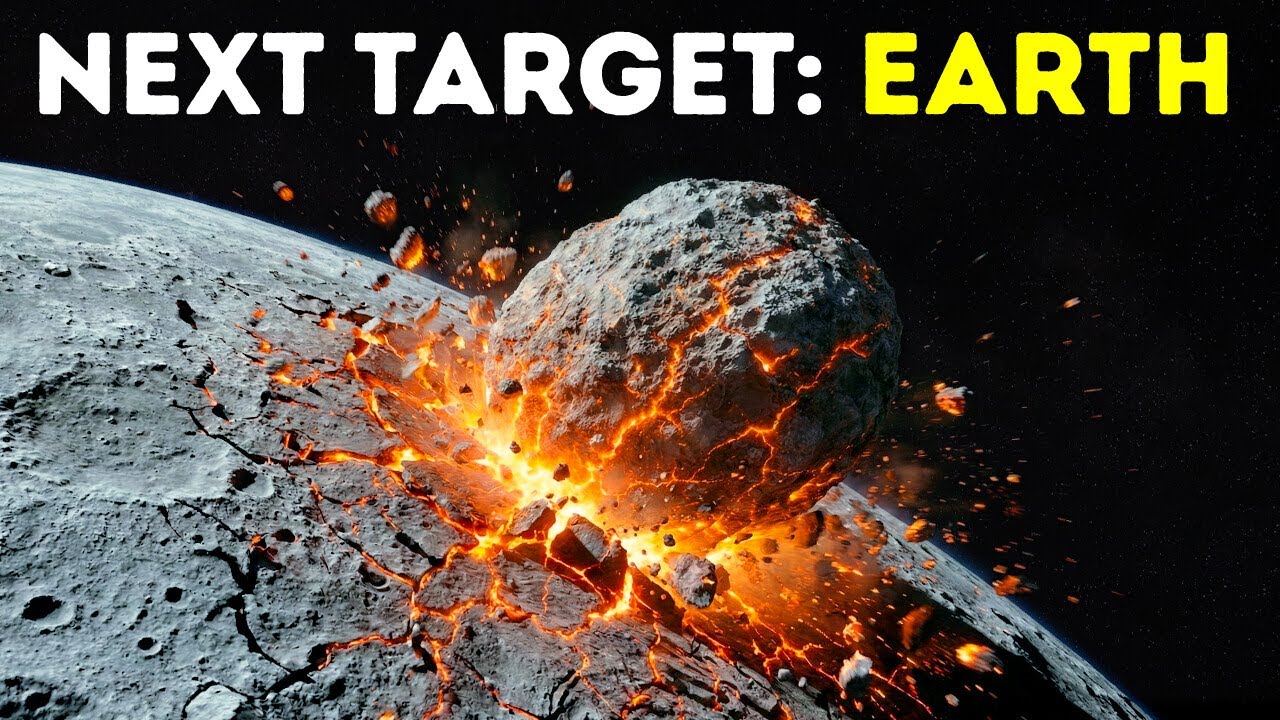
Something Just Hit the Moon – And We Caught It Live

Something Just Hit the Moon – And We Caught It Live